Botanical buying guide
Vintage Botanical Prints: How to Check the Source Before You Buy
Identify the product format, trace any historical attribution and check the complete image before choosing your crop or frame.
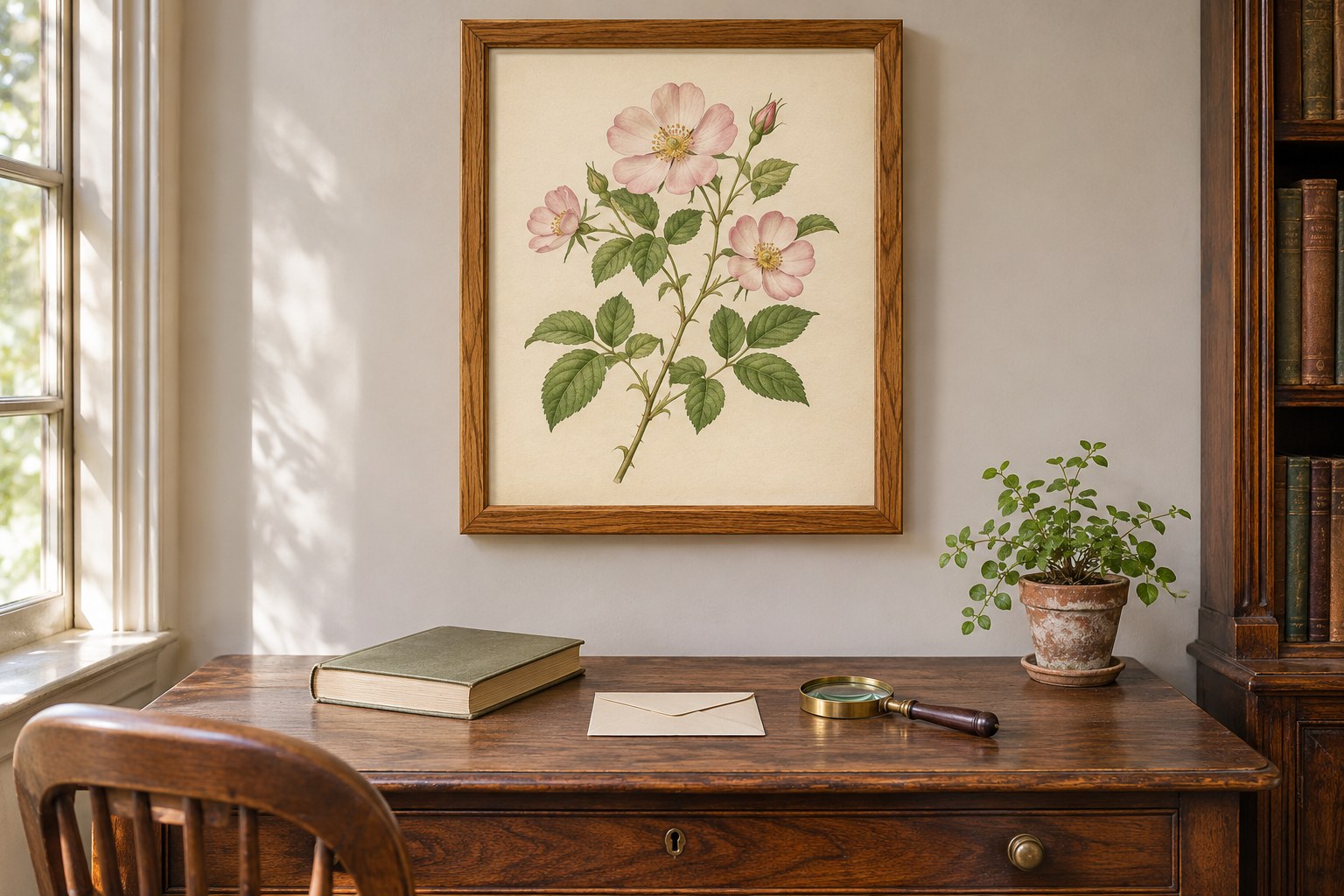
Start with what you want to own
A vintage botanical print can mean several different things in a shopping search: an old physical sheet, a newly made reproduction of an older illustration, or a recent image with a vintage appearance. Before comparing prices or frame sizes, decide which of those you actually want. A beautiful new print can be exactly right for your wall; it simply answers a different buying question from a collectible old sheet.
Separate the image’s origin from the object being sold. A date associated with the original illustration does not, by itself, date a modern print made from it. Likewise, a download is a file, even when the image it contains has a long history. Read the format description rather than relying on the room photograph.
If your priority is decorating, you may care most about the composition, file options and colors. If your priority is an identified historical work, you will also want a traceable attribution and source. Write that priority down before a bundle or an attractive mockup changes your shopping list.
Why the original context can change your choice
Botanical illustration has a scientific role as well as a decorative one. Kew explains that illustrations support the description of plants in scientific records and publications. Its account of scientific botanical illustration also describes the use of carefully observed plant characteristics.
That context helps explain why a botanical plate may include small additional drawings, numbered details or text outside the main plant. Those details may be part of what you like about the image, rather than clutter to remove. A decorative flower painting can appeal for a different reason: the color relationship, brushwork or mood. Neither needs to pretend to be the other.
Look closely before calling an image a scientific record. The presence of a Latin-looking label or an aged background is not enough to establish its maker, date or purpose. If the seller does not identify a source, treat that history as unverified rather than completing it from appearance.
Ask for a useful source description
When historical attribution matters, look for enough information to find the image again independently. Depending on what the seller knows, that could include an artist, publication title, volume, plate number or a collection record. You do not need every field for every image, but you do need a trail that connects the attribution to the work being offered.
Compare the pictured plant, page layout and any visible plate details with the named source. A title in a description may refer to a series or book rather than to that exact image. If the source link leads only to a general collection homepage, ask whether there is an individual item or page reference.
Keep a distinction between “unknown” and “wrong.” An unattributed picture is not automatically misdescribed. It may simply be sold for its decorative appearance, with no documented historical claim. Decide whether that meets your own buying goal.
A concise seller question is: Is this an old physical sheet, a newly printed reproduction or a digital file? If the illustration is attributed to an earlier artist or publication, could you share the source record for this specific image?
Compare the full image with the offered crop
Once you have identified the image, compare the entire page with the version being sold. Note whether text, borders, roots, small diagrams or blank margins have been removed. A crop may suit your room better, but make that a conscious preference.
For example, suppose a botanical page has a tall flowering stem and several tiny details along its lower edge. A tightly cropped portrait version may preserve the flower but lose those details. If you like the study-page character, look for a version that keeps them. If you only want the plant silhouette, the simpler crop may be more useful.
Ask which preview represents the actual file or physical print. Room mockups show a styling idea; they do not necessarily reveal the exact border or frame opening you will receive. Compare the flat artwork preview and any size-specific examples before ordering.
For a pair or trio, do this check for every image. Similar frame mockups can conceal very different original margins. Our botanical set-selection guide explains how to compare the images after this source check.
Use a three-part comparison sheet
For each shortlist item, record three separate answers. This keeps a documented source from distracting you from a poor crop, and a beautiful room photograph from substituting for the product details.
- 1. Image origin
- Named artist or publication: _____ Specific source record or page: _____ What remains unknown: _____
- 2. Product supplied
- Old sheet / new physical reproduction / digital file / other: _____ Included dimensions or file options: _____ What I still need the seller to confirm: _____
- 3. Composition I will display
- Full plate or crop: _____ Labels and borders preserved: _____ Favorite detail that must remain visible: _____
Consider two hypothetical listings. Listing A supplies a modern download, names its source clearly and keeps the full page. Listing B supplies a physical reproduction but gives no specific attribution and crops away the lower detail. If you want the history and page structure, A may be the stronger starting point even though you still need to arrange printing. If you simply prefer B’s crop, choose it for that reason rather than assuming the physical format proves greater age.
Make the decorating decision last
After the format and source are clear, compare the artwork with your room. Keep the feature that made you choose it: an unusual plant, a generous margin, fine detail or a rich flower color. Do not automatically crop that feature away to fit the first frame you find.
Check the visible opening and outside frame dimensions separately with the seller or framer. For an old or personally valuable sheet, ask a qualified framer or conservator about suitable display rather than altering it to match a modern frame. This guide helps you select and document the image; it does not authenticate antiques or prescribe conservation treatment.
Browse our botanical collection for decorative options, and use each listing’s own description to confirm what is included. For room ideas, see botanical kitchen and bathroom styling. Keep the source notes with your purchase record so the image’s story remains available after it is framed.