Wall art planning
Framed Wallpaper as Wall Art: Choose the Pattern, Size and Placement
Treat framed wallpaper as one artwork: choose the finished outside size, compare the pattern with what is staying in the room, and check the exact crop before ordering paper or a frame.
Love the wallpaper, but not a whole wall of it? Plan one deliberate panel.
When does framed wallpaper make sense?
Choose it when you love a repeating design but want one contained piece of pattern, rather than a whole patterned wall.
A botanical repeat, a scenic section or a geometric design can become the room’s main artwork. It is especially worth considering when you like a wallpaper but do not want to commit to covering an entire wall. You still need suitable hanging permission and hardware; a frame does not automatically make a project renter-friendly.
There are three different decisions: wallpaper across the wall, a wallpaper panel inside a frame, or a conventional print. Choose the framed panel because you enjoy that particular design and crop—not because every blank wall needs more decoration.
How big should the finished panel be?
Plan the outside frame dimensions first, in relation to the furniture and the usable wall around it.
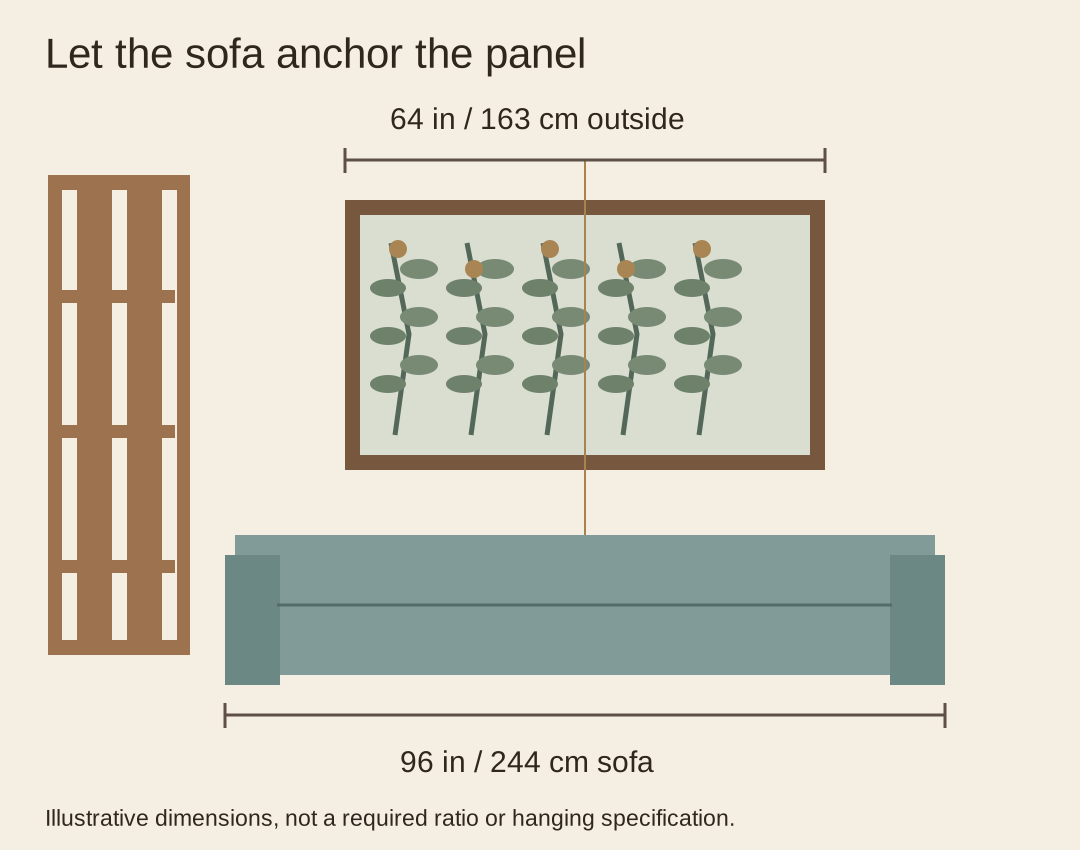
Above a long sofa, start by testing a horizontal rectangle centered on the main back section. Include the divider, doorway, lamps and nearby shelves in the same view. The center of the entire wall may differ from the center of the seating you are trying to anchor.
For a first comparison, try a paper rectangle around two-thirds of the sofa width, then a narrower or wider one. This is a visual starting point, not a rule. A bold dark design can feel substantial at a smaller size than a pale, low-contrast design.
Worked example: a hypothetical 96-inch (243.84 cm) sofa and a 64-inch (162.56 cm) outside frame leave 16 inches (40.64 cm) on each side when centered. A 64 × 36-inch (162.56 × 91.44 cm) rectangle is only a test option; your actual wall, seating position and preferred artwork may call for something else.
Which pattern works beside shelves, slats or a room divider?
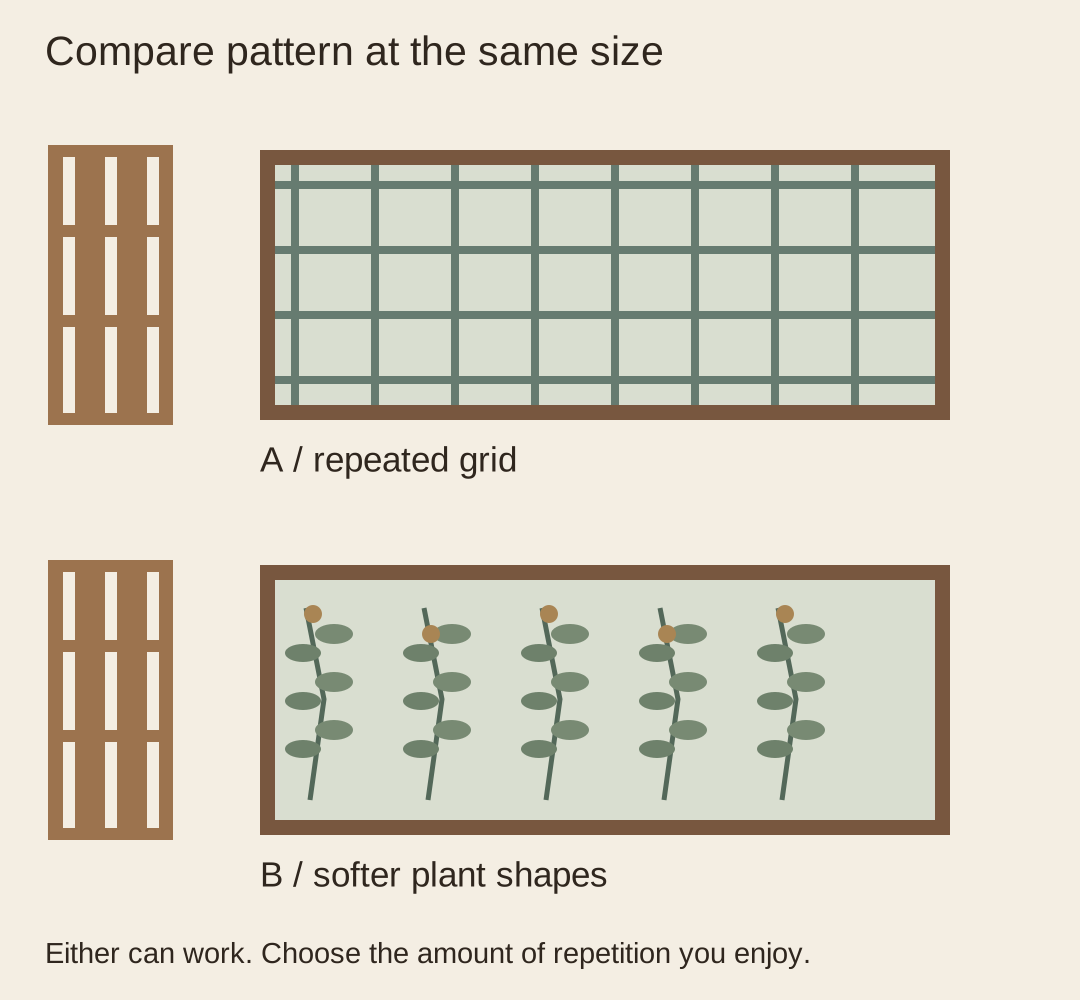
Compare the wallpaper’s lines with the lines already in the room, keeping the proposed panel size the same.
A wooden divider with a strong rectangular grid is already a pattern. A geometric wallpaper can deliberately echo it, while loose leaves, branches or a landscape can introduce softer shapes. Neither choice is automatically better. Compare both from your usual seat: do you like the repetition, or does your eye keep jumping between the two grids?
Start with one or two connections to the things staying in the room. Blue-green seating might connect to muted leaves; warm timber might connect to an ochre detail or a wood frame. The panel does not need to reproduce every room color. A quiet background can be more useful than another exact color match.
Will a wallpaper sample show enough of the design?
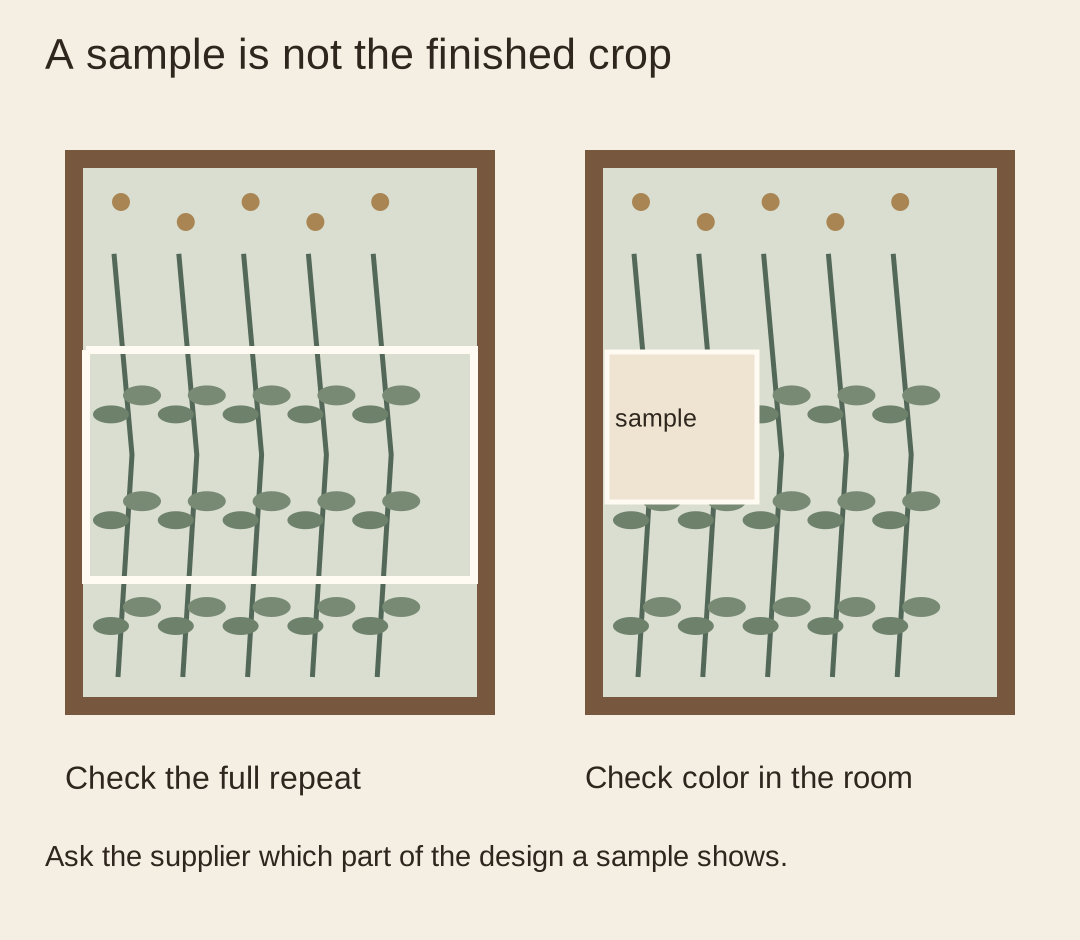
Use a sample to judge color and texture, and a full-repeat image or sufficiently large piece to judge the final crop.
A small swatch may contain only part of a flower, branch or architectural motif. It cannot necessarily show what a broad horizontal panel will look like. York’s sample FAQ lists standard samples at 8 × 10 inches and notes that some patterns offer other sizes. Check the particular supplier’s sample details rather than assuming every sample contains the whole design.
Before ordering, ask for the roll width, repeat dimensions, pattern-match information and an image showing the complete repeat. Then compare those with the visible opening you want inside the frame. If that opening is wider than one usable strip, ask whether the design will require joined lengths and whether a visible join suits your plan. A sample is a useful test, not proof that one roll width will make a seamless panel.
Move a paper window over an authorized full-repeat image to compare crops. Watch the edges: are the most interesting leaves or figures cut awkwardly? Would a narrower rectangle preserve a motif you love? Do not stretch the pattern to fit a shape it was not designed for.
Should you add a mat or use a simple frame?
Test a simple frame first; compare a mat only if you want a calmer border around the pattern.
A wood finish that relates to a console or divider can connect the panel to the room. A slim dark frame creates a firmer outline. A wide pale mat adds breathing space, but it also increases the finished size or reduces the visible design area for a fixed frame size.
Keep three measurements separate: the finished outside frame, the visible opening, and the paper the framer needs. They are not interchangeable. Ask a framer to confirm the paper, backing, mounting method, glazing and final weight for your particular wallpaper. This guide is about the visual plan; it is not a mounting, conservation or frame-cutting specification.
How do you test it without buying the full setup?
Test the full outside footprint on the actual wall, then compare the material sample beside the furniture in different light.
- Measure the main furniture width and mark the wall areas that need to stay usable. Note doors, switches, shelves, lights and any existing screen or artwork.
- Make two paper rectangles at possible finished frame sizes. Check any temporary attachment method on the relevant wall finish first.
- Compare one centered panel with your alternative. Leave clear wall around it instead of automatically stretching the composition to both corners.
- Hold the actual sample beside the sofa, woodwork and frame sample in daylight and evening light. A small paper template tests size; it does not reproduce a dark pattern’s visual weight.
- Take photos from the doorway and normal seating position. Keep the whole divider or adjacent display in the photograph.
- Confirm the final crop, materials and total framing price before ordering. Choose a wall fixing suitable for the finished piece and wall, following the relevant manufacturer’s instructions.
A planning worksheet to complete before ordering
Print this page or copy the table. Finish the styling decisions before asking for a technical framing specification.
Swipe or scroll sideways to read the full table.
| Decision | Your note |
|---|---|
| Main furniture width | _____ inches / _____ cm |
| Usable wall boundaries | Doors, switches, lamps, shelves: _____ |
| Outside frame options A / B | _____ × _____ / _____ × _____ |
| Chosen visible design crop | Motifs to keep inside the opening: _____ |
| Wallpaper width and repeat checked? | _____ ; joined lengths needed? _____ |
| Two existing connections | Color: _____ ; finish or shape: _____ |
| Sample checked in actual light? | Day: _____ ; evening: _____ |
| Framer’s confirmed specification | Materials, opening, paper size, weight and quote: _____ |
Keep the best crop and the best outside size together. If the framing changes, repeat the template check before ordering.
Questions about framed wallpaper
Can you frame wallpaper instead of covering the wall?
Yes, a wallpaper design can be presented as a framed panel. Confirm the exact paper, crop and framing method with a framer before ordering materials.
Does framed wallpaper have to fill a large wall?
No. Relate it to the furniture and neighboring features, and compare full-size paper outlines. Leaving wall space clear is a valid part of the composition.
Can a small sample tell me the final composition?
Not always. Check the sample size and whether it shows the complete repeat. Use a full-repeat image and the intended visible opening to compare the final crop.