Styling basics
How to Choose Wall Art That Works With Your Existing Room
Choose art that repeats one or two colors from the things that are staying, such as the rug, the sofa or the floor, and frame it in a finish the room already has. The art doesn't need to match everything; a couple of deliberate connections make it look planned.
You love the rug. The walls are rental grey. The sofa isn't going anywhere. So which art actually works?
This is one of the most common questions people ask about decorating, and the answer is simpler than it looks. You don't need art that matches everything, just art that connects to the room in one or two deliberate ways. Below are the rules and three worked examples, each with an annotated diagram.

What should you look at before choosing wall art?
Start with the things that are staying: the floor, the sofa or bed, the rug, and the wall color. The art has to work with them, not the other way round.
Most "help me choose art" questions come from people who already love their rug, can't change the rental's grey walls, or are keeping the tiles. That's the normal situation, and it makes choosing easier: the room has already picked half your palette.
- List what stays. Floor, large furniture, rug, curtains, wall color, tiles. Anything you won't replace this year.
- Name 3–5 colors in that list. Squint at the room or take a photo and look at it small; the main colors jump out.
- Note the finishes. Warm wood, black metal, brass, white trim. Frames will repeat one of these.
- Mark the busiest thing. A patterned rug or wallpaper is your "loud" element. The art should be calmer than it, or deliberately match its colors.
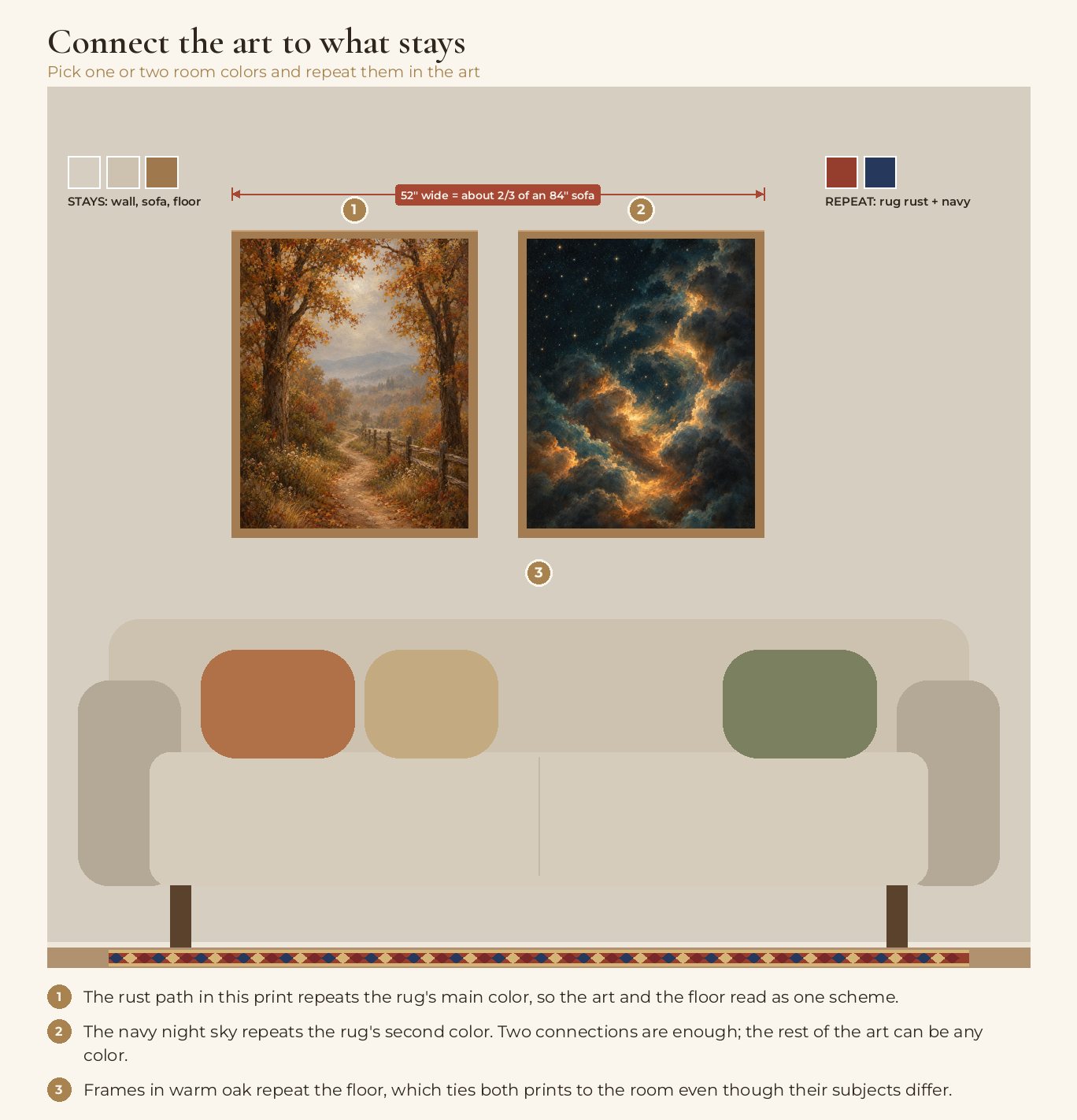
Does wall art have to match the room?
No. Repeat one or two colors from the room in the art, and let everything else be different.
Matching every color is what makes a room look like a catalog. Designers look for connections instead: one color the art shares with the rug, one finish the frame shares with the furniture. That's enough for the eye to read the room as planned.
Swipe or scroll sideways to read the full table.
| Room color that stays | Repeat it in the art as | Example prints |
|---|---|---|
| Rust or terracotta rug | Autumn leaves, warm paths, sunsets | Fall landscapes |
| Navy or deep blue sofa | Night skies, moonlit water, ink sketches | Moody and celestial art |
| Sage or olive walls | Botanicals, meadows, still lifes with greenery | Vintage botanicals |
| Warm wood floor or furniture | Brown, ochre and amber tones, or an oak frame | Landscapes in oak frames |
| Black metal or dark trim | Black frames, high-contrast sketches | Ink and engraving prints |
Rule of thumb: one color in the art should appear at least twice elsewhere in the room. That repetition is what ties them together.
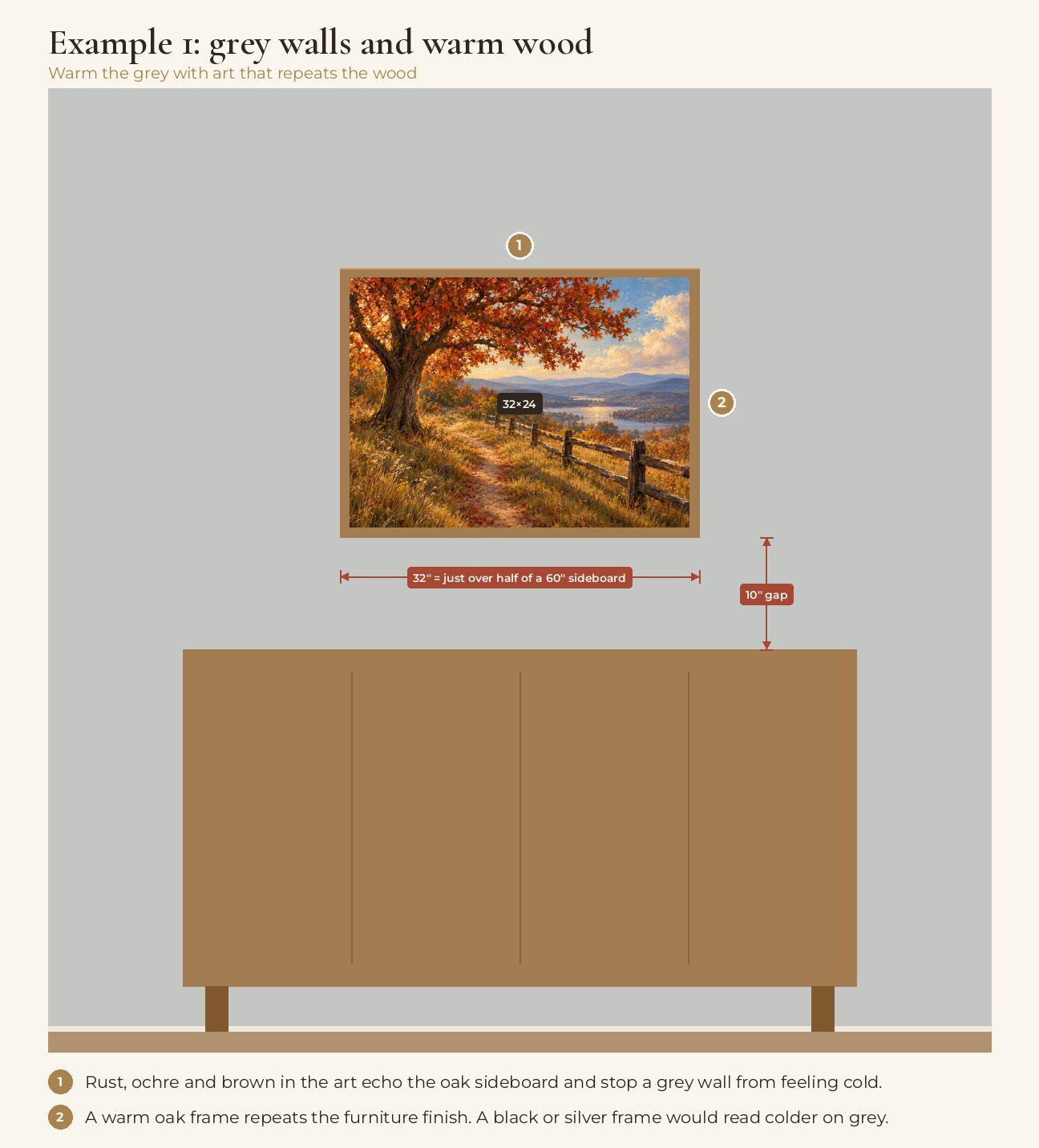
Example 1: what art goes with grey walls and wood furniture?
Warm art. Rust, ochre and brown in the print, plus a wood frame, stop a grey wall from feeling cold and link it to the furniture.
Grey walls with oak or walnut furniture are the most common rental setup. Cool art (blue seascapes, black-and-white photos) on grey makes the wood look out of place. Warm art bridges the two.
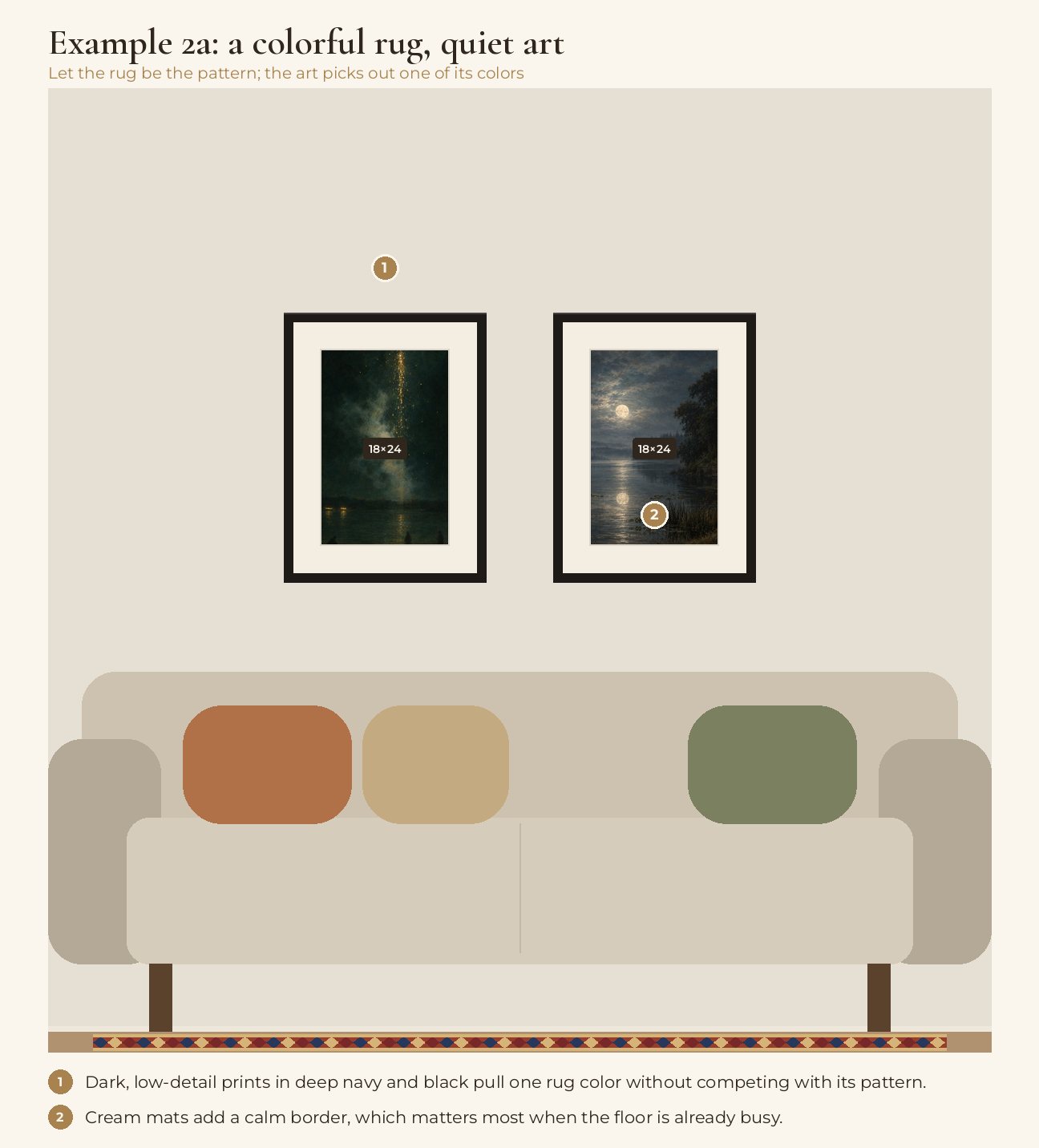
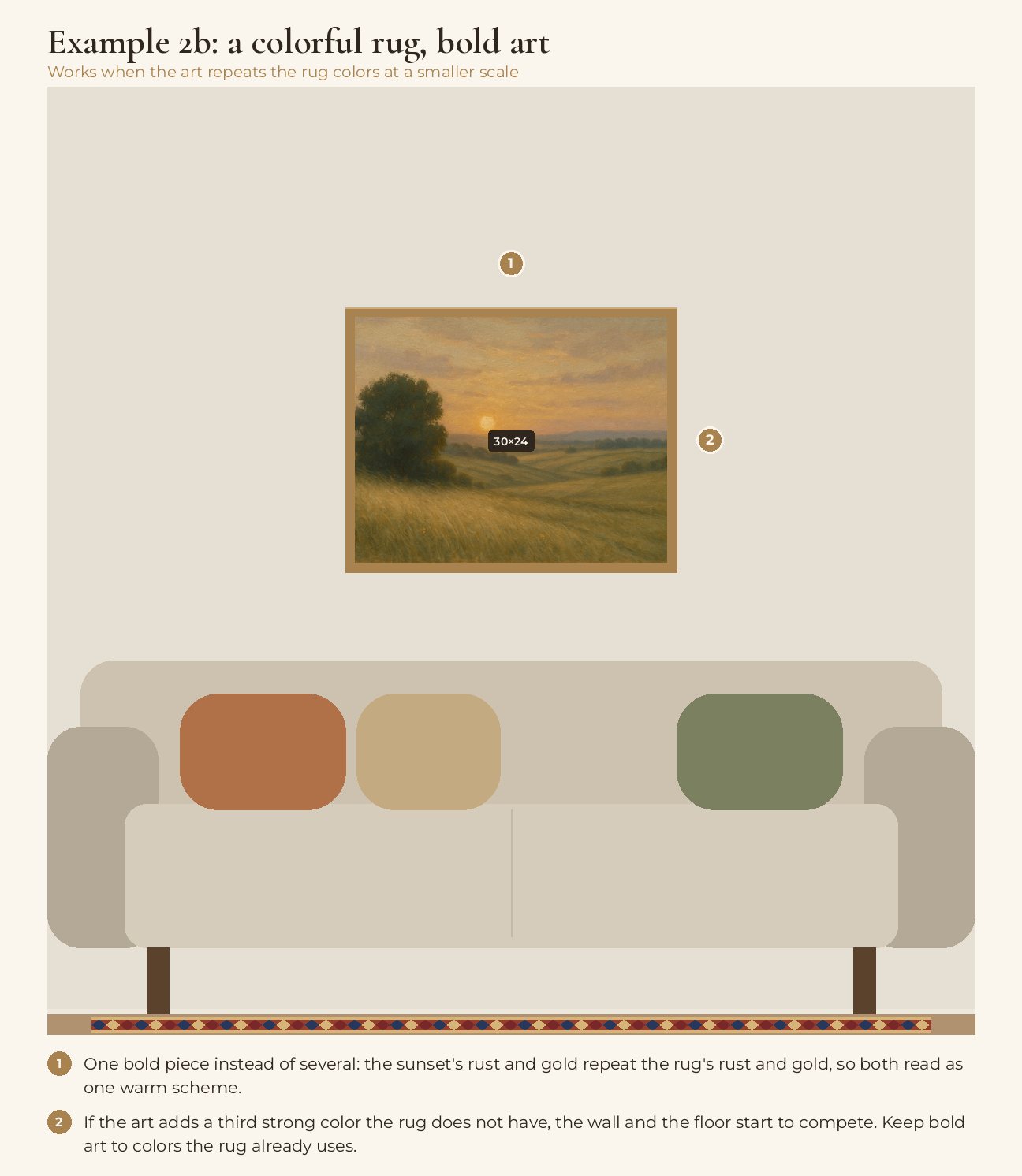
Example 2: what art goes with a colorful traditional rug?
Either quiet art that picks out one rug color, or one bold piece that uses only colors the rug already has.
A Persian-style or kilim rug is already a pattern-heavy piece of art on the floor. You have two good options:
- Quiet: darker, low-detail prints (night scenes, sketches) with cream mats. They pick out one rug color, usually the navy or the deep red, and give the eye somewhere to rest.
- Bold: one larger piece whose colors are all already in the rug, such as a sunset that repeats its rust and gold. Avoid adding a third strong color the rug doesn't have.
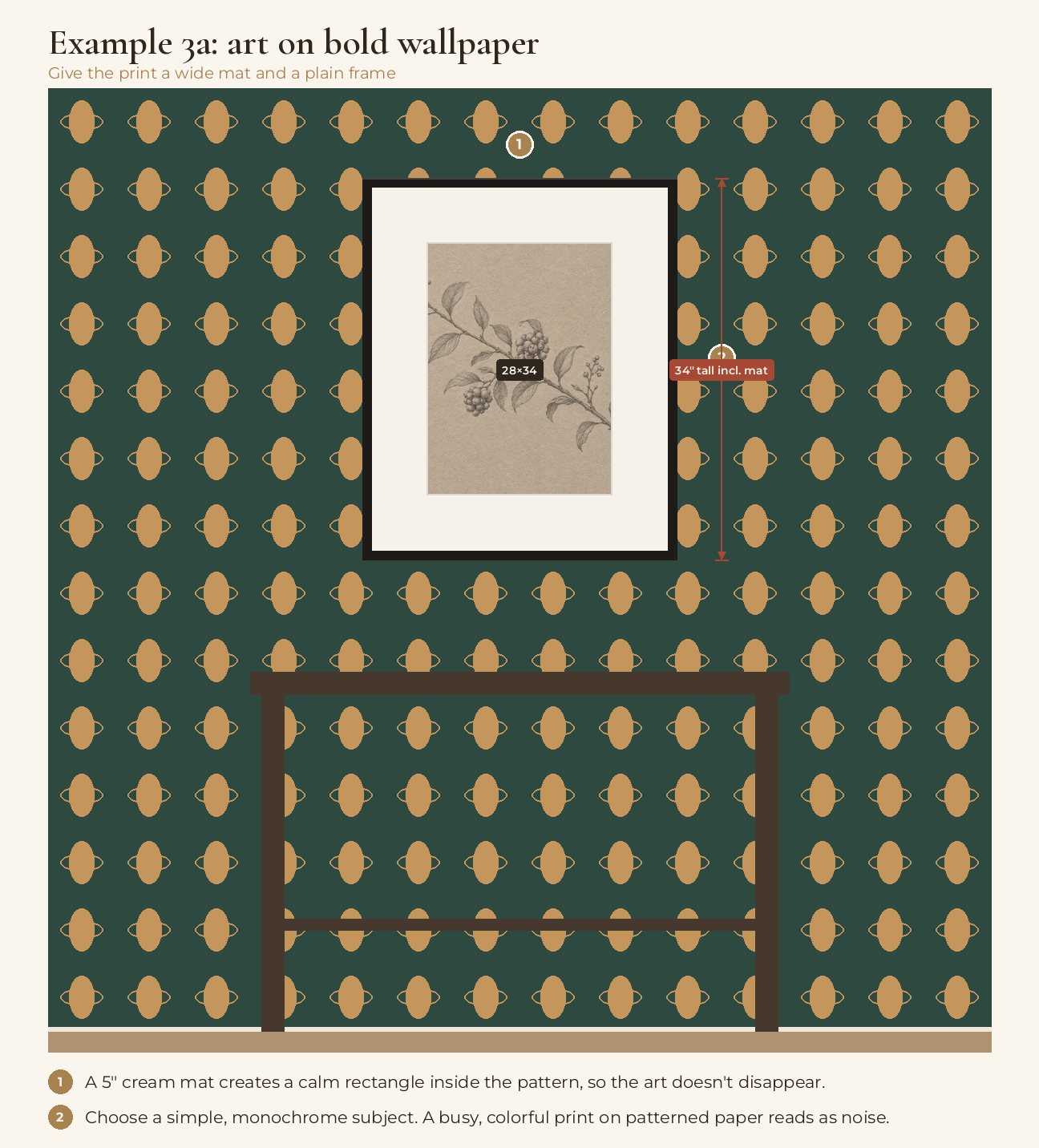
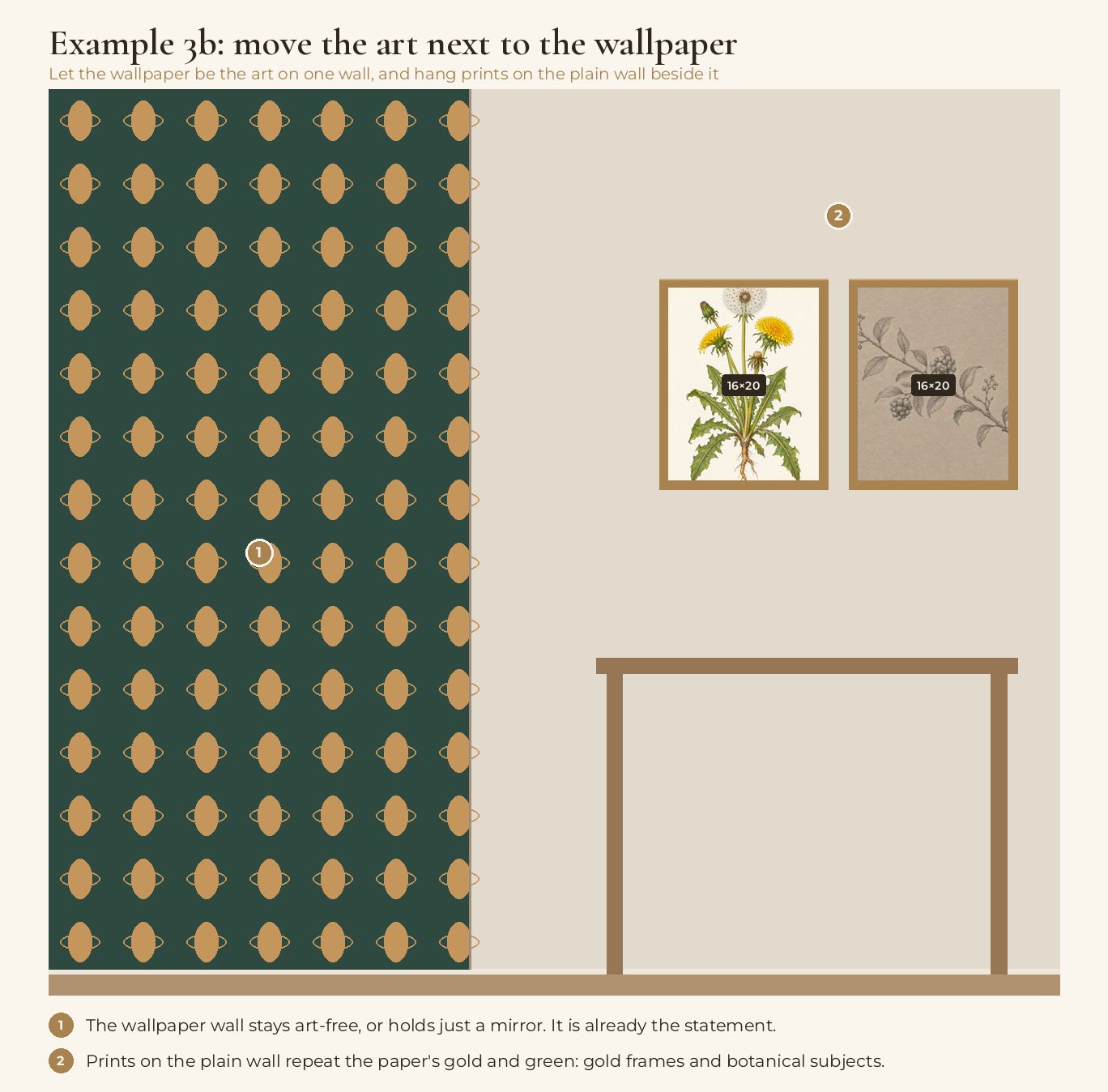
Example 3: can you hang art on bold wallpaper?
Yes, with a wide mat and a simple, quiet subject. Or move the art to the plain wall next to it and let the wallpaper be the art.
Patterned wallpaper behind a busy print makes both disappear. The fix is a border of calm: a 4–5" mat creates a plain rectangle inside the pattern. Monochrome subjects such as botanical sketches and engravings hold up best.
In what order should you buy art for a room?
Settle the big furniture and textiles first, test art with samples and paper templates, then buy one anchor piece and add slowly.
- Fix the big pieces. Sofa, bed, rug and curtains decide the palette. Buying art first is how rooms end up fighting themselves.
- Collect samples. Hold a paint chip, a cushion or a rug corner next to the art on screen, or print a small test copy at home.
- Make paper templates. Cut kraft paper to the frame sizes and tape them up for a few days. Our sofa size guide has the measurements.
- Buy one anchor. The largest piece, in the strongest connecting color.
- Add slowly. Smaller pieces later, each repeating a color already on the wall.
Printable art makes step 2 almost free: print the file small on your home printer and tape it next to the rug before committing to a large print.
Can the art be a different style from the furniture?
Yes. A different style works when it shares one color or finish with the room.
A vintage oil landscape in a modern grey living room, or a moody botanical in a bright Scandinavian bedroom, looks deliberate as long as something connects it. Usually that's the frame (oak to match the floor, black to match the lamp) or one shared color. Contrast in style is fine; contrast in everything is what looks random. For mixing several styles on one wall, see how to mix vintage art.
FAQ
Should wall art match the rug?
It should share one or two colors with the rug, not match it exactly. Repeating the rug's main or accent color once in the art is enough to connect them.
What color art goes with grey walls?
Warm colors such as rust, ochre, amber and brown, especially in wood frames. They warm the grey and connect it to wood furniture. Cool blue art on grey can look cold.
Can you put art on a wall with patterned wallpaper?
Yes. Use a simple, mostly monochrome print with a wide (4–5 inch) mat and a plain frame, or hang the art on a plain wall next to the wallpaper instead.
How do I choose art when I can't change my furniture?
List the colors and finishes of what's staying, pick one or two to repeat, and test with a small home print or paper template before buying a large piece.
More styling guides
Find art in your room's colors
Browse prints by season and style, from warm autumn landscapes to navy night skies.
Browse the collections Visit the Etsy shop